


The Energy Mix
To be able to understand the following graphs and statistics, let's have a quick look at what the energy mix in the EU is made of:
- Oil and petroleum products are products derived from crude oil (e.g. refinery gas, gasoline, gas/diesel oil etc.).
- Natural gas is a naturally occurring mixture of gaseous hydrocarbons consisting primarily of methane.
- Electricity is an alternative fuel that can be used to power all-electric and plug-in hybrid cars. Powering vehicles with electricity can be cost-effective and can have significant energy security and emissions benefits.
- Solid fossil fuel means solid fuel other than biomass, including anthracite and dry steam coal, hard coke etc.
- Renewable energy is energy derived from natural sources that are replenished at a higher rate than they are consumed.
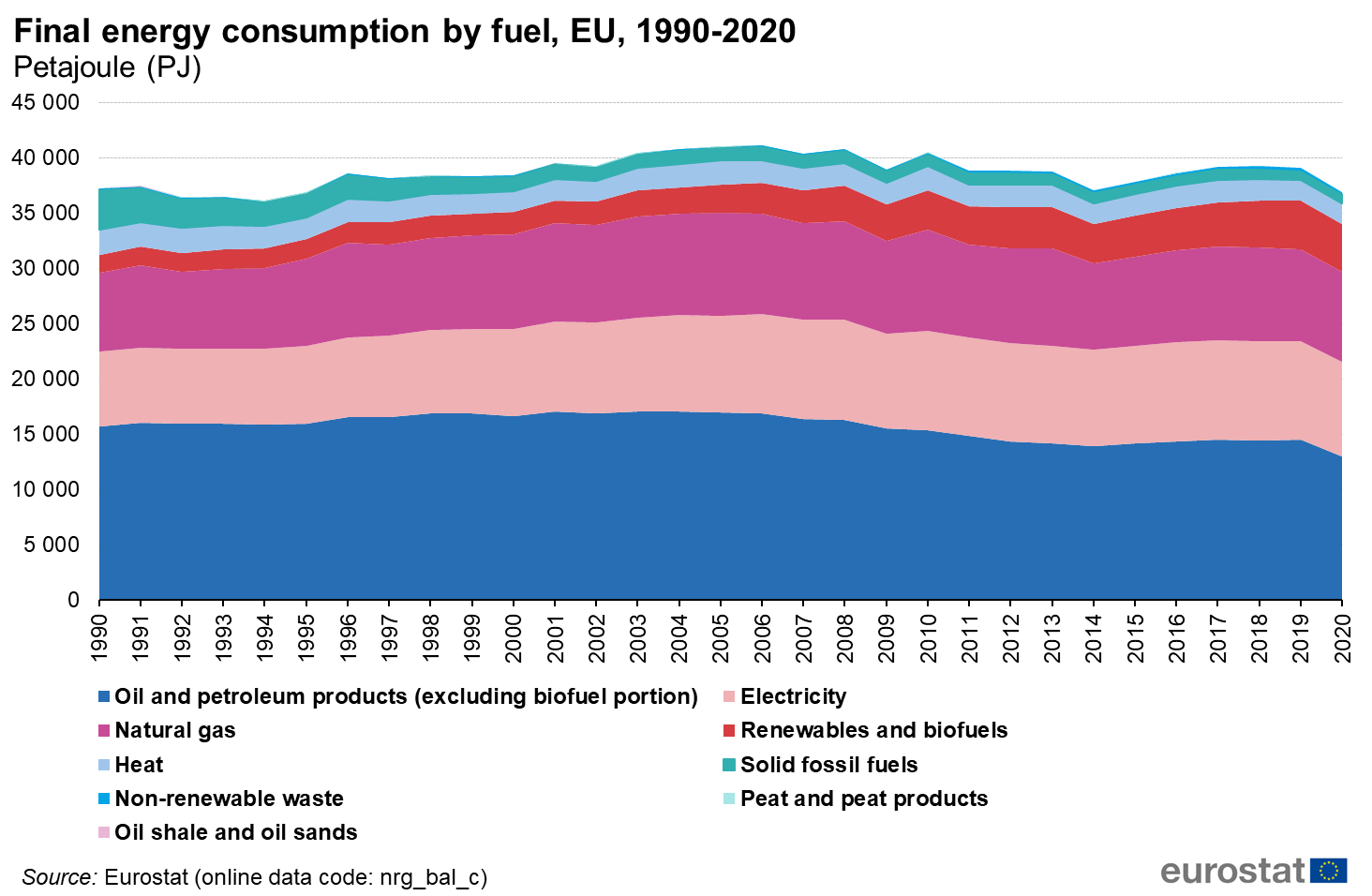
| As you can see in the following graph, between 1990 and 2020 the amount and share of solid fossil fuels in final energy consumption dropped significantly (from 9.6 % in 1990 to 3.6 % in 2000, 2.8 % in 2010, and 2.1 % in 2020). On the other hand, renewable energy sources increased their share in the total, moving from 4.3 % in 1990 to 5.3 % in 2000 and 8.8 % in 2010, finally reaching 11.8 % in 2020. Natural gas remained quite stable over this period, ranging from 18.8 % (in 1990) to 22.6 % (in 2005), its share in the total equalling 21.9 % in 2020. Oil and petroleum products accounted for the biggest share (35.0 %) in the structure of final energy consumption in 2020, followed by electricity (23.2 %), and natural gas (21.9 %). Solid fossil fuels contributed only 2.1 % to the final energy consumption at the end-use level. |
 |
 Source: LINK
.png)